
Description
Short Description
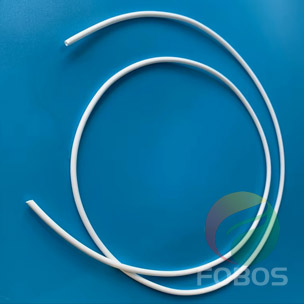
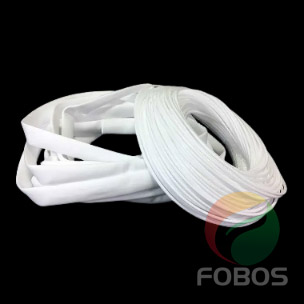
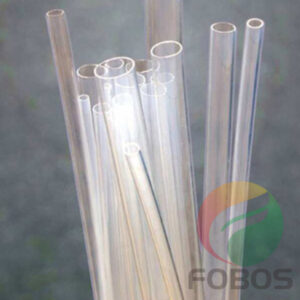
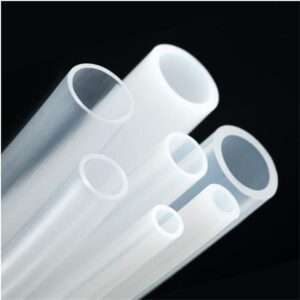
Fobos Polymer manufactures medical ePTFE microporous tubing for catheter systems, endoscopic working channels, flexible device sections, vascular device components and precision medical assemblies.
• Microporous node-and-fibril ePTFE structure
• Flexible and low-friction tube construction
• Custom ID, OD, wall thickness and pore performance
• Class 10,000 cleanroom production available
• ISO 13485:2016 quality management system
Product Overview
Medical ePTFE microporous tubing is designed for catheter and minimally invasive device components that require flexibility, controlled porosity, low friction and chemical stability.
The expansion process transforms PTFE into a microporous structure made of solid nodes connected by fine fibrils. This structure is softer and more flexible than conventional solid PTFE tubing. It can also provide controlled air and vapor permeability.
These properties make medical ePTFE tubing suitable for bending sections, working channels, protective sleeves, porous coverings and other precision medical device components.
Fobos Polymer supplies ePTFE tubing and component materials for integration into customer-designed medical devices. Tubing dimensions and porous performance can be developed from drawings, samples and application requirements.
Medical Device Advantages
Flexible Microporous Structure
The node-and-fibril structure gives ePTFE tubing flexibility while maintaining tube integrity. It is suitable for components that must follow curved paths or operate in flexible sections of a medical device.
Smooth, Low-Friction Surface
The PTFE surface helps reduce friction when guide components, instruments, optical fibers or fine wires move through or alongside the tubing.
Controlled Porosity
Porosity can be adjusted according to the required airflow, density, flexibility and barrier performance. This supports medical venting, gas management and porous covering applications.
Chemical Resistance
ePTFE retains the chemical resistance associated with PTFE. It can be evaluated for components exposed to cleaning agents, process chemicals and different medical-device operating media.
Naturally Hydrophobic
Standard ePTFE is naturally hydrophobic. This property is useful when a component must allow gas transmission while limiting liquid penetration under specified conditions.
Medical Applications
Catheter Bending Sections
Flexible ePTFE tubing can be used in catheter shaft sections that require repeated bending and controlled movement. Dimensions and flexibility can be adjusted according to the device structure.
Endoscopic Working Channels
Its low-friction surface and flexibility make ePTFE suitable for endoscopic working-channel components and internal liners. It can help instruments pass through curved sections more smoothly.
Vascular Device Components
Medical ePTFE tubing can be developed as a covering, liner or flexible component for vascular device assemblies. Material grade, dimensions and pore structure are selected according to the device requirements.
Optical Fiber and Sensor Protection
The tubing can protect optical fibers, fine sensor wires and electrical components in compact medical assemblies. Its flexibility allows it to follow the movement of the device.
Medical Venting and Pressure Equalization
Microporous ePTFE tubing can provide controlled gas transmission in medical equipment, sensor systems and fluid-management components that require pressure equalization.
Porous Medical Device Coverings
Thin-wall ePTFE tubing may be evaluated as a porous covering for frames, support structures and other precision components. Wall thickness, strength and pore performance are developed according to the assembly.
Medical Tubing Design Parameters
Fobos can evaluate the following parameters:
• Inside diameter and outside diameter
• Wall thickness and tube length
• Pore structure and internodal distance
• Porosity and material density
• Airflow at a specified differential pressure
• Bubble point or pore-size test requirement
• Water-entry pressure
• Flexibility and tensile performance
• Dimensional tolerance
• Cut lengths or continuous coils
• Material and packaging requirements
Dimensional Reference
Published medical ePTFE tubing data commonly include these reference ranges:
• Inside diameter: approximately 0.7–22 mm
• Outside diameter: approximately 2–40 mm
• Wall thickness: approximately 0.05–1.00 mm
• Internodal distance: approximately 10–100 μm
These values are used for initial engineering reference. Final manufacturing dimensions must be confirmed after reviewing the medical device drawing, tube structure and performance requirements.
Internodal distance is not the same as absolute pore diameter. Therefore, medical device manufacturers should specify the required test method when pore performance is critical.
Class 10,000 Cleanroom Production
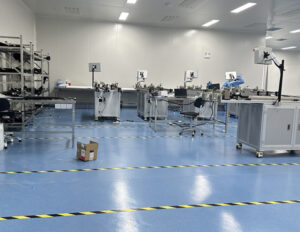
Fobos Polymer provides Class 10,000 cleanroom production and handling for medical ePTFE microporous tubing.
The controlled environment helps reduce particulate contamination during tubing production, handling, cutting, inspection and packaging. This is especially important for small-diameter tubing, thin walls and porous materials used in precision medical assemblies.
Fobos operates under an ISO 13485:2016 quality management system. Inspection items can be agreed according to the project, including:
• ID, OD and wall-thickness inspection
• Visual and surface inspection
• Airflow or permeability testing
• Cut-length inspection
• Clean handling and packaging
• Sample and batch inspection records
Development and Sample Support
Medical ePTFE tubing performance depends on both its dimensions and microporous structure. For this reason, development normally begins with a drawing, physical sample or defined performance requirement.
Fobos can support engineering samples before batch production. The sample can be evaluated for fit, flexibility, airflow, assembly performance and compatibility with the intended device process.
For an accurate evaluation, please provide:
• Required ID, OD and wall thickness
• Tube length and quantity
• Intended medical device component
• Required pore or airflow performance
• Test pressure and test method
• Operating medium
• Assembly and sterilization conditions
• Drawing or reference sample
Why Fobos Polymer?
Fobos Polymer specializes in precision fluoropolymer tubing for medical device manufacturers.
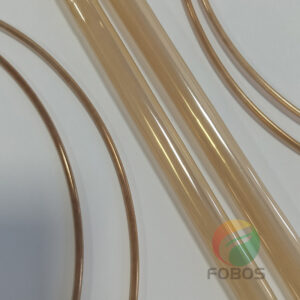
Our product range includes single-lumen PTFE tubing, multi-lumen tubing, thin-wall tubing, etched tubing, heat-shrink tubing and medical ePTFE microporous tubing.
Fobos combines Class 10,000 cleanroom production, ISO 13485 quality management and precision fluoropolymer processing experience. As part of the SUKO group, we also benefit from in-house polymer-processing equipment engineering and production-process development.
This allows us to support medical tubing projects from initial samples through batch production.
FAQ
What is medical ePTFE microporous tubing used for?
It is used for catheter bending sections, endoscopic working channels, vascular device components, porous coverings, medical venting components and protective sleeves for optical fibers or sensor wires.
How is ePTFE tubing different from ordinary PTFE tubing?
Ordinary PTFE tubing is dense and nonporous. ePTFE tubing has a microporous node-and-fibril structure that provides greater flexibility and controlled gas permeability.
Can Fobos adjust the porosity?
Yes. Porous performance can be developed according to airflow, density, flexibility, bubble-point or water-entry-pressure requirements.
Can the tube dimensions be customized?
Yes. Fobos can develop the ID, OD, wall thickness, length and dimensional tolerance according to the medical device drawing.
Is the tubing produced in a cleanroom?
Class 10,000 cleanroom production and handling are available for medical tubing projects.
Is ePTFE tubing suitable for sterilization?
The sterilization method and cycle conditions should be provided during development. Compatibility is evaluated according to the material, tube structure and final device assembly.
Request a Quote
Send us your drawing, required ID, OD, wall thickness, length, quantity, pore-performance requirement and medical device application.
Fobos Polymer can help develop a suitable medical ePTFE microporous tubing specification and sample plan.
Phone / WhatsApp: +86 18914343919
Contact: https://fobospolymer.com/contact/
Reviews
There are no reviews yet.