Description
Covering a metal component requires attention to its shape, the area that needs protection and the conditions it will encounter during processing and use. A flat nickel sheet, for example, presents different fitting requirements from a round wire or cylindrical shaft.
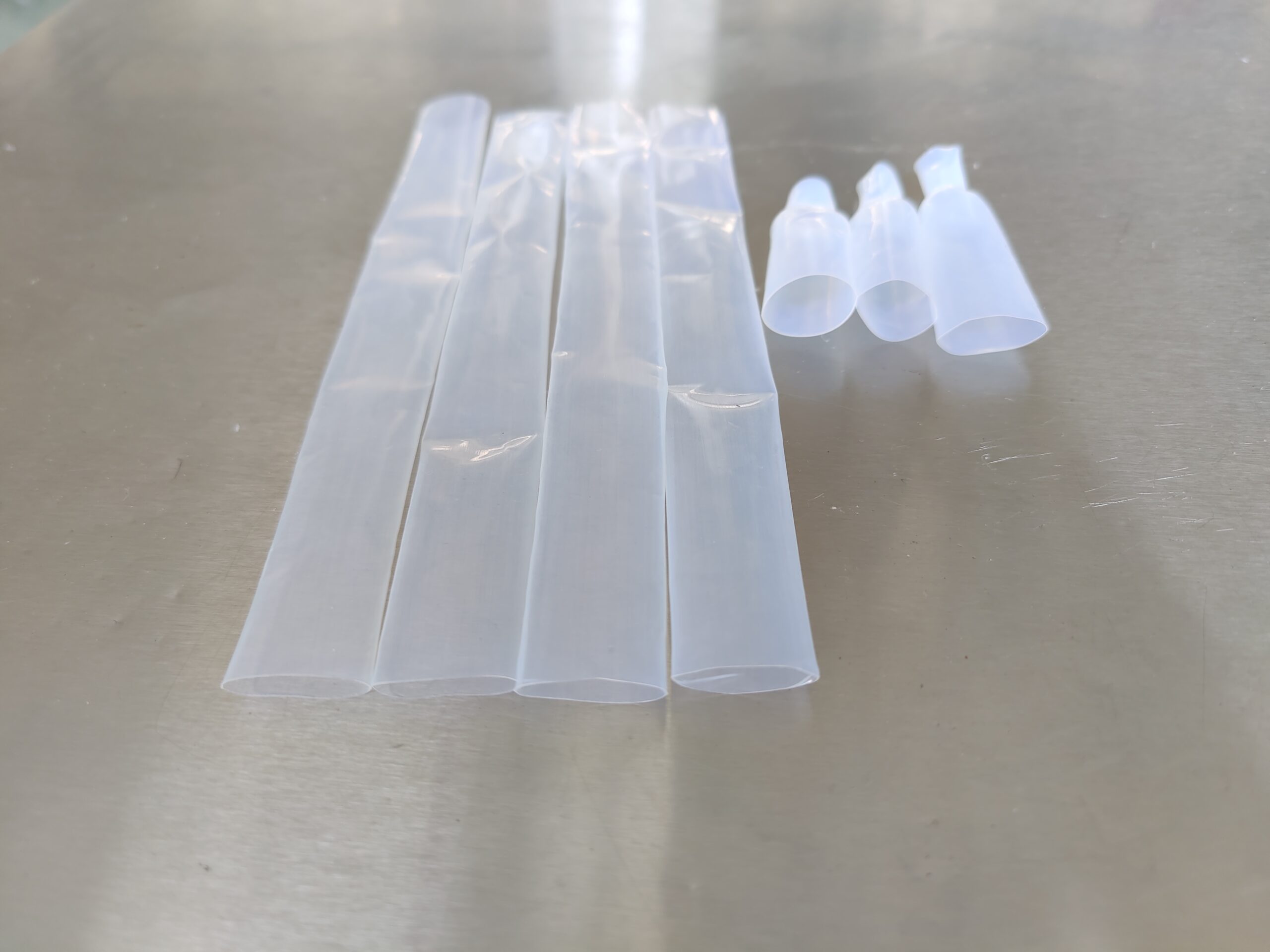
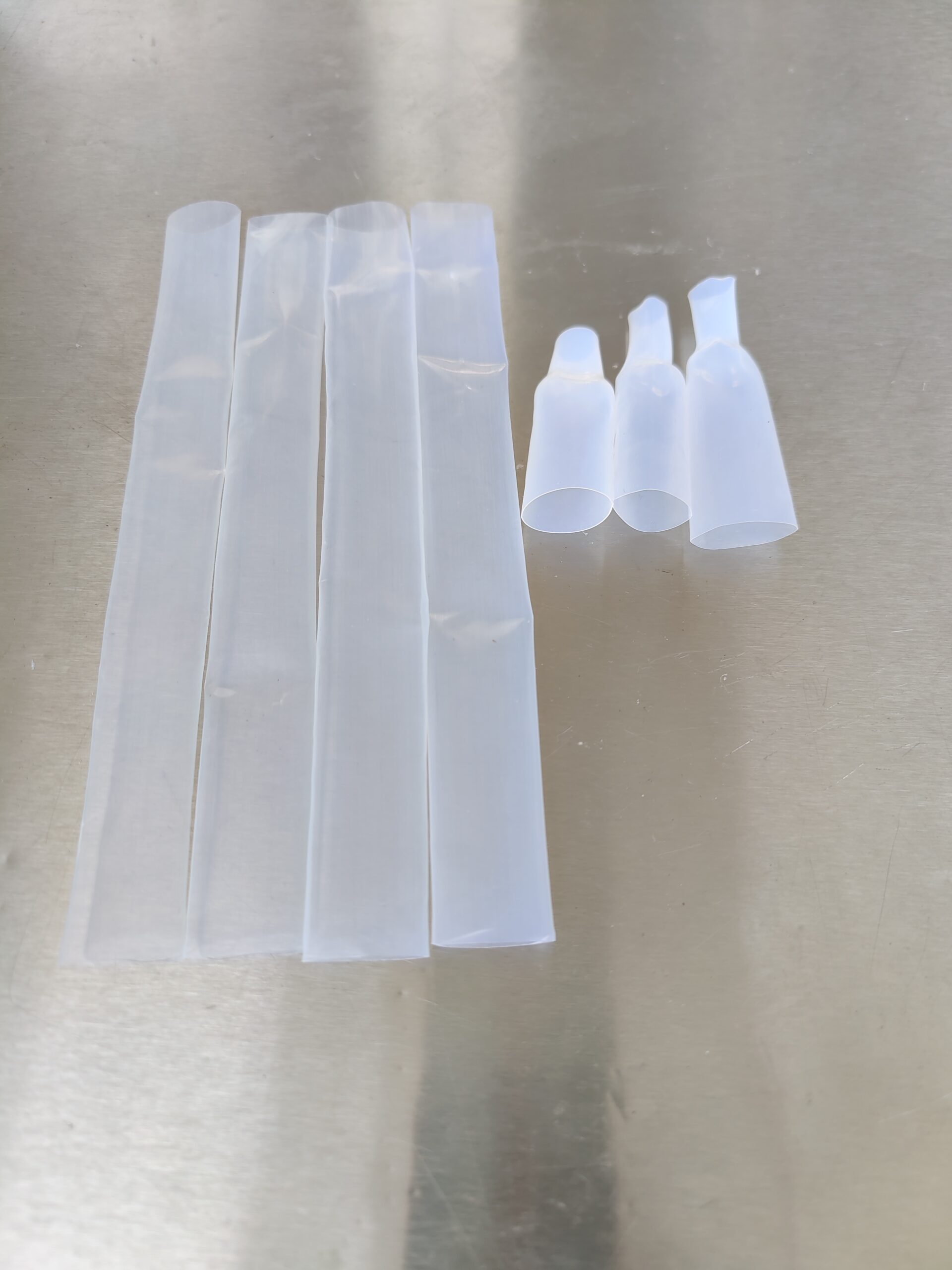
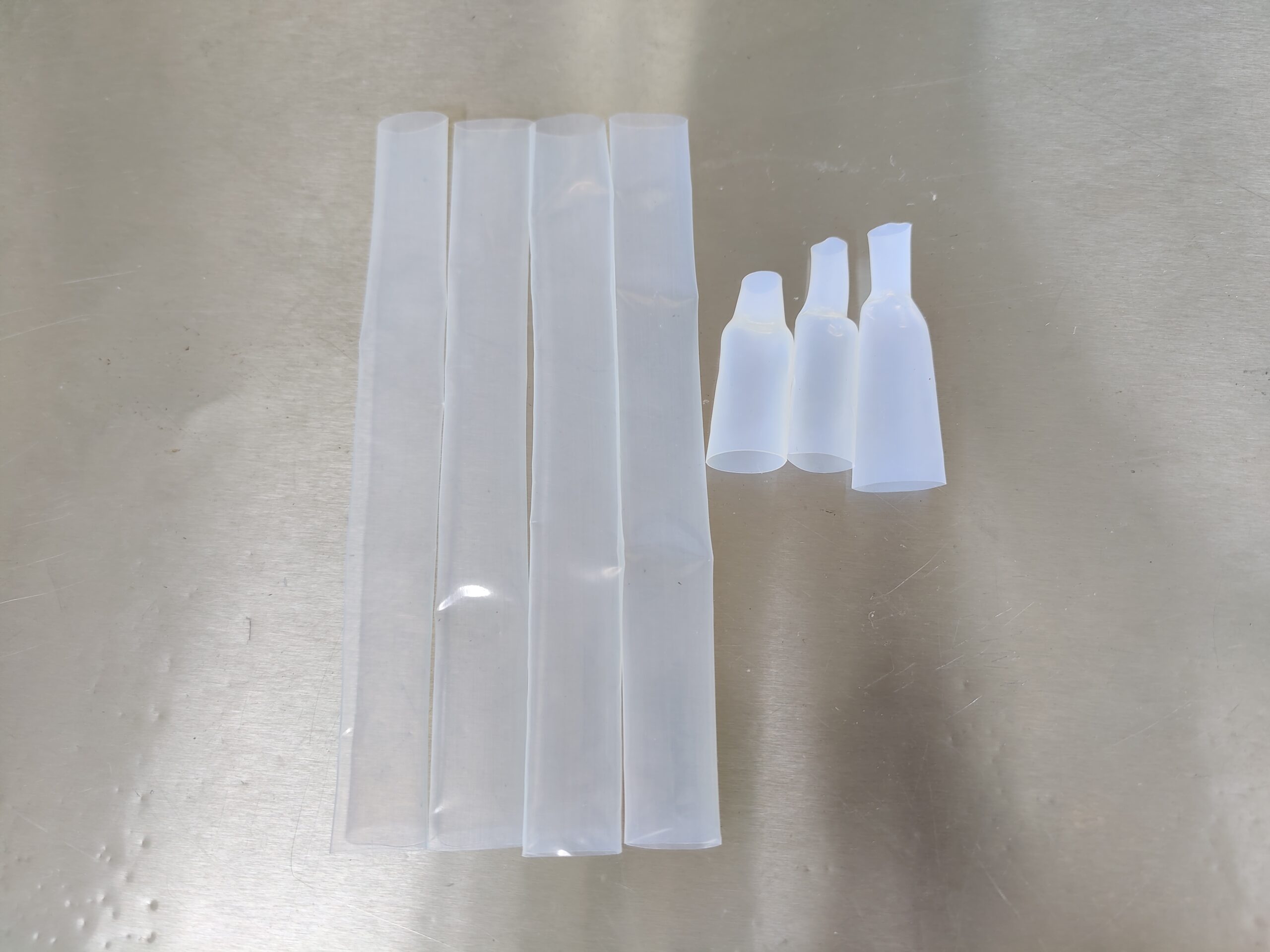
FOBOS works with customers to evaluate PTFE heat shrink tubing for these component-level requirements. Our experience includes a nickel sheet covering project for a medical-sector customer, completed by fitting the tubing over the metal parts and recovering it through oven heating.
With nominal 1.7:1 and 4:1 shrink-ratio series, the product range offers different expanded diameters, recovered dimensions and wall thicknesses for application-specific selection.
From a Nickel Sheet to a Covered Component
In the nickel sheet project, the customer’s component was enclosed in heat shrink tubing before being placed in an oven. Heating caused the tubing to recover around the sheet, completing the covering operation.
This was a practical component-covering application. No adhesive application or additional coating process is implied by the use of heat shrink tubing.
For similar flat metal parts, the initial selection should address the complete cross-section. Width, thickness and edge shape influence whether the tubing can be installed without damage and how it conforms during recovery.
| Case Detail | Project Information |
|---|---|
| Customer | Medical-sector company |
| Part being covered | Nickel sheet |
| Covering material | Heat shrink tubing |
| Installation | Tubing fitted over the nickel sheet |
| Heating process | Oven heating |
| Completed operation | Tubing recovered around the metal component |
The project establishes experience in processing components for a medical-sector customer. Requirements for a specific medical device, including patient contact, remain subject to the intended application and its validation requirements.
What PTFE Contributes to the Covering
PTFE—polytetrafluoroethylene—provides a combination of electrical insulation, heat resistance, chemical resistance and low surface friction.
For a covered component, these properties can support several design objectives:
- Electrically separating a metal surface from adjacent parts.
- Providing an external sleeve in a chemically demanding environment.
- Introducing a low-friction contact surface.
- Maintaining a protective covering within the specified temperature range.
The finished result depends on more than the resin. Wall thickness, coverage, edges, assembly geometry and processing all affect the performance of the covered part.
Matching Recovery to the Part Geometry
Heat shrink tubing is supplied in an expanded condition. When processed under suitable heating conditions, it recovers toward a smaller diameter.
The nominal shrink ratio expresses the relationship between expanded inside diameter and fully recovered inside diameter:
Shrink ratio = Expanded ID ÷ Fully recovered ID
The fully recovered value refers to unrestricted recovery, without a component inside the tubing.
FOBOS offers the following series:
| Series | Selection Consideration |
|---|---|
| 1.7:1 | Appropriate to evaluate where the installation diameter and covered section require a smaller recovery range. |
| 4:1 | Provides a larger recovery range where tubing must accommodate a greater change in component dimensions. |
A higher ratio does not automatically mean a tighter or more effective covering. After the tubing contacts the part, the part prevents further unrestricted contraction.
For that reason, selection should be based on the listed dimensional limits rather than the ratio alone. Recovered wall thickness must also be checked independently; it cannot be inferred from shrink ratio.
For a flat sheet, a trial fit using the actual component or a representative sample helps assess installation clearance and the suitability of the selected size.
Available Size and Wall Options
The following overview summarizes the supplied product specification. Each nominal size has its own expanded and recovered dimensional limits.
| Specification | 1.7:1 Series | 4:1 Series |
|---|---|---|
| Listed nominal sizes | Φ0.5–Φ10 | Φ2.0, Φ2.5, Φ3.0, Φ3.5, Φ4.0, Φ4.5, Φ5.0 and Φ6.0 |
| Expanded ID across listed sizes | 0.5–11.0 mm | 2.0–6.5 mm |
| Fully recovered ID across listed sizes | 0.25–5.53 mm | 0.33–1.50 mm |
| Expanded wall specifications | Separate standard and thick-wall values | Average wall values listed by size |
| Recovered wall specifications | Standard and thick-wall options | Standard and thick-wall options |
These are overall ranges across the series, not interchangeable ordering dimensions. The expanded ID, recovered ID and wall thickness must come from the same selected specification.
Custom requirements can be reviewed against the component drawing, required coverage and operating conditions.
Product Data
| Property | Listed Specification |
|---|---|
| Material | PTFE |
| Construction | Semi-rigid |
| Nominal shrink ratios | 1.7:1 and 4:1 |
| Standard color | Transparent |
| Operating temperature | −65°C to +260°C |
| Listed shrink temperature | 350°C |
| Voltage rating | 600 V |
| Environmental compliance | RoHS, as stated in the product datasheet |
| Referenced specification | SAE-AMS-DTL-23053/12 |
The heating cycle for a component must take into account the tubing specification and the thermal tolerance of all assembly materials. The listed shrink temperature is not a complete oven-processing instruction.
Mechanical, Electrical and Environmental Properties
| Property | Datasheet Value | Test Method / Conditions |
|---|---|---|
| Tensile strength | ≥17.3 MPa | ASTM D2671 |
| Elongation at break | ≥200% | ASTM D2671 |
| Specific gravity | 2.30 | ASTM D792 |
| Heat shock | No cracking or dripping | ASTM D2671; 400°C for 4 hours |
| Low-temperature brittleness | No cracking | ASTM D2671; −65°C for 4 hours |
| Flammability | Self-extinguishing | ASTM D2671 |
| Volume resistivity | ≥1018 Ω·cm | ASTM D2671 |
| Dielectric strength | ≥34 kV/mm | ASTM D2671 |
| Copper corrosion | Pass | UL224 |
| Solvent corrosion resistance | Excellent | SAE-AMS-DTL-23053/12 |
| Water absorption | ≤0.1% | ASTM D570 |
These data support material and tubing selection. They do not replace inspection or testing of the finished covered component.
Manufacturing Support for Medical Projects
FOBOS supports medical-sector work through an ISO 13485:2016-certified quality management system, a Class 10,000 cleanroom and in-house material modification capabilities.
Each capability addresses a different part of project development:
Quality management
The ISO 13485:2016 quality management system provides a framework for managing applicable medical-sector quality requirements.
Controlled production conditions
Cleanroom capability supports projects with defined cleanliness requirements. The production conditions applicable to a particular order should be specified during project review.
Material development
In-house modification capabilities support the development of materials for application-specific performance needs, including chemical resistance and biocompatibility requirements.
Where biocompatibility is required, the relevant ISO 10993 evaluation depends on the finished application, contact type and contact duration. Quality management certification or cleanroom production does not, by itself, establish biocompatibility for every tubing grade.
Defining the Finished-Part Requirements
Before selecting a tube size, it is useful to define what the covering needs to achieve.
For a nickel sheet or similar metal part, the design information should identify the area to be covered, any surfaces that must remain exposed, allowable dimensions after processing and required electrical performance.
After recovery and cooling, the inspection plan can then address those requirements, including:
- Coverage and position.
- Splits, punctures or other visible defects.
- Final dimensions and wall integrity.
- Electrical verification where insulation is required.
- Additional checks specified for the intended application.
This connects tubing selection to the function of the finished component rather than relying on a material description alone.
Discuss a Component-Covering Requirement
FOBOS can review drawings or sample information to assess PTFE heat shrink tubing and covering requirements.
Useful project details include component dimensions, covering length, required quantity, operating conditions and any cleanliness or validation requirements.
Contact FOBOS to request the relevant size specifications or discuss a custom component-covering application.
Contact
Phone/WhatsApp: +86 18914343919
Email: info@fobospolymer.com
Reviews
There are no reviews yet.